Crafting a truly stormproof jacket isn’t just about stitching fabric—it’s a science. When a jacket claims 20,000mm waterproofing, it means it can withstand a column of water 20 meters high without leakage. As an OEM/ODM manufacturer specializing in extreme-weather outerwear, we’ve refined every step of this process, from material selection to final testing. Here’s an exclusive look at how we turn a design brief into a jacket that laughs in the face of downpours.
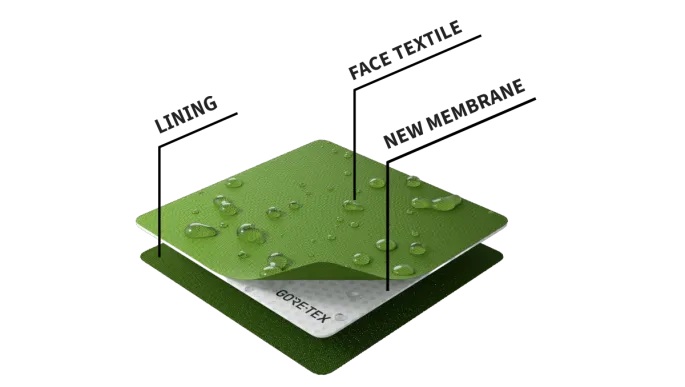
1. Material Selection: The Battle of Membranes
The foundation of any waterproof jacket is its membrane. Two heavyweights dominate the market, each with unique strengths we evaluate rigorously:
A gold standard in the industry, this membrane offers exceptional breathability (up to 25,000g/m²/24h) and long-term durability. Its microporous structure repels water while releasing sweat vapor, making it ideal for high-intensity activities like mountaineering. However, its premium price point adds 15–20% to production costs—a factor we discuss openly with brands targeting luxury outdoor markets.
- Domestic High-Performance Membranes
Our in-house tested high-transmission domestic membrane matches 20,000mm waterproofing at 30% lower cost. While its breathability (around 18,000g/m²/24h) is slightly lower than GORE-TEX Pro, it excels in flexibility—critical for urban jackets requiring a slimmer fit. We’ve partnered with local textile labs to enhance its abrasion resistance, now on par with international standards after 50+ wash cycles.
Our Approach: We don’t push a one-size-fits-all solution. For expedition-grade brands, we recommend GORE-TEX Pro paired with 40D ripstop nylon face fabric. For urban outdoor lines balancing performance and affordability, our domestic membrane with 70D recycled polyester delivers comparable waterproofing with eco-friendly credentials.
2. The Lab: Where Waterproofing Gets Put to the Test
A membrane’s rating is only as reliable as the testing that validates it. Our ISO-certified lab runs three rigorous trials to ensure 20,000mm isn’t just a number:
- Hydrostatic Pressure Testing
Samples of the finished fabric (membrane + face fabric + lining) are clamped into a water-tight chamber. We gradually increase water pressure until the first drop leaks through—20,000mm is our non-negotiable threshold. Failures here mean revisiting the membrane lamination process; last year, we rejected 3 batches of fabric that fell 1,500mm short, even if they met industry “standard” 10,000mm requirements.
Mimicking real-world rain, a specialized machine sprays 500ml of water per minute at a 45° angle onto jacket prototypes. We track moisture penetration over 30 minutes, focusing on seams and stress points. Our pass criteria? Zero dampness on the inner lining—even after 10,000 spray cycles, equivalent to 8 hours of heavy downpour.
Waterproofing must hold up to wear. We subject jackets to 100 cycles of flexing (simulating arm movements) and 50 washes with standard detergent, then retest waterproofing. Any drop below 18,000mm post-testing triggers a redesign of the membrane bonding process.
3. Critical Details: Seams, Zippers, and the “Weak Links”
A jacket is only as waterproof as its most vulnerable part. We obsess over these often-overlooked details:
Stitches create tiny holes, so we seal every seam with 15mm-wide thermoplastic tape applied at 130°C. For 20,000mm jackets, we add a second layer of tape along shoulder seams and pocket openings—areas prone to stretching. Our automated taping machines achieve ±0.5mm precision, ensuring no gaps in coverage.
Standard zippers are a common failure point. We use Vislon zippers with integrated rubber gaskets and storm flaps secured by waterproof snaps. Each zipper undergoes 500 open/close cycles followed by submersion in 30cm of water for 10 minutes—failure to stay dry means switching to heavier-duty marine-grade alternatives.
Elasticated cuffs with adjustable Velcro tabs are engineered to seal tightly around gloves without restricting movement. Hem drawcords feature silicone stoppers that lock in place, tested to resist slippage even when pulled with 5kg of force—preventing rain from seeping up from below.
Inside Our Production Floor: Quality in Action
Our commitment to 20,000mm standards is visible at every station:
All incoming fabrics undergo 100% visual checks for pinholes or membrane defects. A dedicated team uses light tables to scan 10m² swatches, rejecting any roll with more than 2 minor imperfections.
Every 50th jacket off the production line is randomly selected for a 30-minute hydrostatic test. If it fails, the entire batch is quarantined for re-evaluation—a strict policy that has reduced post-shipment returns by 40% for our clients.
Each jacket comes with a traceability report, including membrane batch numbers, test results, and operator signatures. Brands receive digital copies of these reports, building trust with end-users who demand transparency.
Why 20,000mm Matters
This level of waterproofing isn’t overkill—it’s a promise. For mountaineers facing freezing rain, cyclists battling coastal storms, or workers in relentless downpours, a 20,000mm jacket isn’t just gear—it’s protection.
At our facility, we don’t just meet this standard; we engineer for it. Whether partnering with premium brands using GORE-TEX or emerging labels opting for high-performance domestic membranes, our process ensures consistency, durability, and reliability.
Ready to build your stormproof line? Contact our technical team for membrane samples, test reports, and custom prototyping. Let’s turn your vision into a jacket that outlasts the storm.

